A busy Friday evening is often the most profitable time of the week for a restaurant. Orders are coming in, the kitchen is moving at full speed, dishwashers are running nonstop, and every sink, floor drain, and plumbing fixture is working harder than ever. Then, without warning, a floor drain backs up in the middle of the kitchen.
What begins as a slow drain can quickly become standing water, delayed food preparation, safety hazards for employees, and the possibility of health code violations. Every minute spent dealing with a plumbing emergency means lost productivity, frustrated staff, and customers waiting longer for their meals. In severe cases, a plumbing failure can force a temporary kitchen closure, resulting in lost revenue and damage to your restaurant’s reputation.
Unlike residential plumbing, commercial kitchen plumbing systems are built to withstand continuous heavy use. They must handle large volumes of hot water, grease, food waste, detergents, and cleaning chemicals every day while meeting strict plumbing and sanitation requirements. From grease interceptors and floor drains to prep sinks, commercial dishwashers, ice machines, and commercial water heaters, every component plays a critical role in keeping restaurant operations running smoothly.
Restaurant owners throughout St. Petersburg, Pinellas Park, Clearwater, Largo, Seminole, Gulfport, Treasure Island, St. Pete Beach, and surrounding Pinellas County communities understand that reliable plumbing isn’t simply a maintenance issue. It is an essential part of daily operations. Identifying plumbing problems early, scheduling preventative maintenance, and working with an experienced commercial plumbing company can help minimize downtime and prevent costly emergency repairs.
In this guide, we’ll explain why commercial kitchen plumbing requires specialized expertise, discuss the most common plumbing problems affecting restaurants, explore important health code and backflow prevention requirements, and share practical maintenance strategies that help commercial kitchens remain safe, efficient, and fully operational.
Key Takeaways
- Understand why commercial kitchen plumbing systems require specialized maintenance and repair.
- Learn the most common plumbing problems affecting restaurants and food service facilities.
- Discover how grease buildup, heavy equipment, and constant water usage accelerate plumbing wear.
- Explore preventative maintenance strategies that reduce emergency repairs and business interruptions.
- Learn when it’s time to call an experienced commercial plumbing professional before small issues become costly emergencies.
Why Commercial Kitchen Plumbing Is Different
Commercial kitchens operate under conditions that residential plumbing systems were never designed to handle. Every day, hundreds or even thousands of gallons of water move through sinks, dishwashers, floor drains, and cooking equipment. At the same time, grease, food particles, detergents, and cleaning chemicals constantly travel through the drainage system.
This combination creates a much more demanding plumbing environment than a typical home.
While a residential kitchen may only experience a few hours of daily use, restaurant plumbing systems often operate continuously from early morning food preparation until late-night cleanup. During busy service periods, multiple fixtures may be running simultaneously, placing constant pressure on water supply lines, drainage systems, valves, and plumbing fixtures.
Unlike residential plumbing, commercial kitchens must also comply with strict sanitation standards and plumbing regulations designed to protect employees, customers, and the public water supply. Proper drainage, grease management, backflow prevention, and equipment maintenance all play important roles in helping restaurants remain compliant while avoiding costly operational disruptions.
When one component begins to fail, the effects are rarely isolated. A slow floor drain can delay cleaning procedures, a leaking prep sink can interrupt food preparation, and reduced water pressure at a commercial dishwasher can affect sanitation standards. Even relatively small plumbing problems can quickly impact multiple areas of the kitchen during peak operating hours.
Why Commercial Kitchen Plumbing Wears Out Faster
One of the biggest differences between residential and commercial plumbing is the amount of daily wear placed on every component of the system.
During commercial kitchen inspections, one of the most common problems plumbers encounter is grease buildup that has slowly accumulated inside drain lines. Restaurant owners often don’t notice the problem until sinks begin draining slowly or floor drains back up during a busy service. By that point, the blockage has usually been developing for weeks or even months.
Grease is especially challenging because it doesn’t remain liquid after entering the plumbing system. As wastewater cools inside the drain line, fats, oils, and grease (FOG) begin sticking to pipe walls. Over time, these deposits collect food debris and other waste, gradually reducing pipe capacity and restricting water flow.
High-temperature water also contributes to plumbing wear. Commercial dishwashers, cooking equipment, and sanitizing stations repeatedly expose plumbing components to rapid temperature changes. Pipes, fittings, seals, and valves continuously expand and contract throughout the day, increasing stress on the system and accelerating normal wear.
Heavy daily use places additional strain on faucets, shut-off valves, floor drains, sink connections, and commercial plumbing fixtures. Unlike residential systems that receive occasional use, restaurant plumbing often operates almost continuously for twelve to sixteen hours every day.
Why Small Plumbing Problems Become Expensive Emergencies
Many restaurant plumbing emergencies don’t begin with catastrophic pipe failures. They begin with small warning signs that are easy to overlook.
Imagine a restaurant preparing for a busy Friday dinner rush. The kitchen staff notices that one floor drain is draining a little slower than usual, but because everything is still operating, service continues. Throughout the evening, grease, food debris, and wastewater continue flowing into the same drain until it can no longer keep up with demand. Suddenly, water begins backing up across the kitchen floor, creating a slip hazard, interrupting food preparation, and forcing employees to stop what they’re doing to manage the situation.
Similarly, a small leak beneath a prep sink may appear insignificant at first. However, continuous moisture can gradually damage cabinetry, flooring, nearby equipment, and surrounding building materials while creating conditions that encourage mold growth and sanitation concerns.
These situations illustrate why commercial plumbing issues rarely resolve themselves. Small problems generally become larger, more disruptive, and significantly more expensive when left unaddressed.
Routine plumbing inspections allow many of these issues to be identified before they affect restaurant operations. Addressing problems early helps reduce emergency service calls, minimize business interruptions, protect expensive equipment, and maintain a safer working environment for employees and customers.
The most successful restaurants treat plumbing maintenance as part of their daily operational strategy rather than something to address only after an emergency occurs. Preventative maintenance helps protect revenue, reduce downtime, and extend the life of commercial plumbing systems.
Common Commercial Kitchen Plumbing Problems
Commercial kitchens rely on multiple plumbing systems working together throughout every shift. When one fixture begins to fail, the impact often extends well beyond that individual piece of equipment.
Understanding the most common plumbing problems affecting commercial kitchens allows restaurant owners and facility managers to recognize warning signs earlier, schedule repairs before service is disrupted, and reduce the likelihood of unexpected emergencies during peak business hours.
In the next section, we’ll look at the plumbing issues restaurants encounter most frequently. These range from grease trap problems and floor drain backups to dishwashing equipment, prep sinks, and the preventative maintenance strategies that help keep commercial kitchens operating efficiently.
Commercial kitchens depend on every plumbing fixture working reliably throughout the day. Unlike residential properties, restaurants rarely have the luxury of shutting down operations to deal with plumbing issues. Even a relatively small problem can quickly disrupt food preparation, employee productivity, and customer service if it isn’t addressed promptly.
Understanding the most common plumbing problems allows restaurant owners to recognize early warning signs before they develop into expensive repairs or operational downtime.
Grease Trap and Grease Interceptor Problems
Grease interceptors are one of the most important components of any commercial kitchen plumbing system. Their purpose is to separate fats, oils, and grease (FOG) before wastewater enters the sanitary sewer system.
During commercial plumbing service calls, one of the most common findings is a grease interceptor that has gradually lost efficiency due to accumulated grease and food solids. Restaurant owners often notice unpleasant odors, slow-draining sinks, or recurring drain backups long before they realize the grease interceptor itself has become the underlying issue.
Proper grease management practices recommended by the Florida Department of Environmental Protection also help reduce fats, oils, and grease (FOG) entering public sewer systems.
Maintaining grease interceptors not only improves drainage but also helps restaurants operate more efficiently while supporting compliance with local plumbing and environmental regulations, including the Pinellas County Commercial Grease Management Program.
Floor Drain Backups
Floor drains work continuously behind the scenes to keep commercial kitchens clean and safe. Every day they collect water from equipment cleaning, food preparation, floor washing, and general kitchen operations. Because these drains receive grease, food particles, detergents, and cleaning chemicals throughout every shift, they naturally experience more wear than residential drainage systems.
One partially restricted floor drain may not seem serious during slower business hours. However, during peak service, multiple sinks, dishwashers, and prep stations discharge wastewater simultaneously. If drainage capacity has already been reduced by grease buildup, the floor drain can quickly overflow.
Besides interrupting kitchen operations, standing water creates slip hazards for employees and increases sanitation concerns throughout food preparation areas.
Regular inspections and professional drain cleaning help reduce these risks while extending the life of commercial drainage systems.
Dishwashing Stations, Prep Sinks, and Commercial Fixtures
Commercial kitchen fixtures experience constant daily use. Prep sinks support food preparation throughout every shift, while commercial dishwashers operate almost continuously to maintain proper sanitation standards. This constant demand places significant stress on supply lines, valves, drain assemblies, seals, and plumbing connections.
Restaurant managers should pay attention to warning signs such as:
- Slow-draining prep sinks
- Reduced water pressure
- Water leaks beneath sinks or dishwashing equipment
- Persistent drain odors
- Frequent fixture repairs
- Inconsistent dishwasher performance
Many of these issues begin as relatively minor maintenance concerns but can quickly affect food preparation and cleaning operations if ignored.
Professional inspections help identify developing problems before equipment failures interrupt daily business.
Staying Compliant with St. Petersburg Health Codes
Restaurant plumbing plays a critical role in maintaining food safety and protecting public health. Beyond keeping kitchens operational, commercial plumbing systems must also meet local plumbing requirements designed to reduce contamination risks and maintain sanitary working conditions.
Restaurants throughout St. Petersburg and Pinellas County are expected to maintain plumbing systems that support proper drainage, grease management, potable water protection, and overall kitchen sanitation while complying with the Florida Building Code – Plumbing. Staying proactive with inspections and maintenance helps reduce the likelihood of unexpected violations while creating a safer environment for employees and guests.
Backflow Prevention Protects Your Water Supply
Backflow prevention devices are designed to keep contaminated water from flowing back into the public drinking water system.
Commercial kitchens contain multiple fixtures connected to potable water supplies, including prep sinks, dishwashers, beverage stations, ice machines, and cleaning equipment. Changes in water pressure can create situations where contaminated water could potentially move in the opposite direction unless properly protected.
Routine testing and inspection of backflow prevention devices help restaurants maintain compliance while protecting both the facility and the surrounding community.
Building Code Compliance Starts with Routine Inspections
Commercial plumbing systems experience constant wear, making routine inspections an important part of long-term facility maintenance.
During inspections, commercial plumbers evaluate:
- Drainage performance
- Fixture condition
- Shut-off valves
- Grease interceptor operation
- Water pressure
- Visible leaks
- Drain line performance
- Potential code-related concerns
Finding these issues early allows repairs to be scheduled before they interfere with restaurant operations or health inspections.
When Repair Is the Better Option
Professional repair is often recommended when:
- The faucet is less than 10 years old.
- The leak is caused by worn washers, seals, or cartridges.
- The fixture is otherwise in good condition.
- Replacement parts are readily available.
- The existing faucet still matches your kitchen or bathroom.
Many quality faucet brands are designed with replaceable internal components, including Delta, Moen, Kohler, Pfister, and American Standard. In these cases, repairing the faucet is often faster and more affordable than installing a new fixture.
When Replacement Makes More Sense
There are situations where replacing the faucet is the smarter long-term investment. Replacement is often recommended if:
- The faucet is more than 15 to 20 years old.
- Multiple repairs have already been performed.
- The fixture shows signs of corrosion or physical damage.
- Replacement parts are no longer available.
- You’re remodeling your kitchen or bathroom.
- You want improved water efficiency or modern features.
Today’s faucets offer better durability, smoother operation, improved finishes, and WaterSense®-certified models that help reduce water consumption without sacrificing performance.
For homeowners planning a renovation, replacing an aging faucet can improve both functionality and the overall appearance of the space.
Preventative Maintenance Saves Time, Money, and Downtime
The most successful restaurants don’t wait for plumbing emergencies before taking action. Instead, they invest in preventative maintenance that helps identify developing issues before they become expensive repairs. While emergency plumbing service is sometimes unavoidable, proactive maintenance significantly reduces the likelihood of unexpected shutdowns during busy operating hours.
Hydro Jetting
Commercial kitchen drains gradually accumulate grease, food debris, soap residue, and mineral deposits that conventional drain cleaning may not completely remove.
Hydro jetting uses high-pressure water to clean the full interior diameter of commercial drain lines, removing years of accumulated buildup rather than simply creating a temporary opening through the blockage.
For restaurants producing heavy grease loads every day, scheduled hydro jetting helps maintain proper drainage while reducing recurring clogs and emergency service calls.
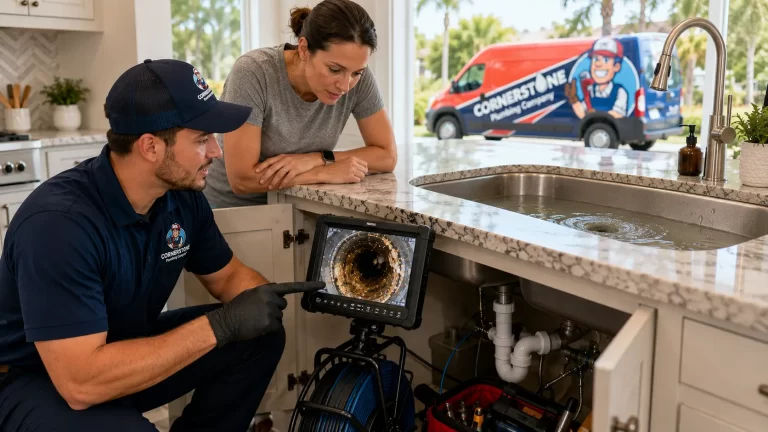
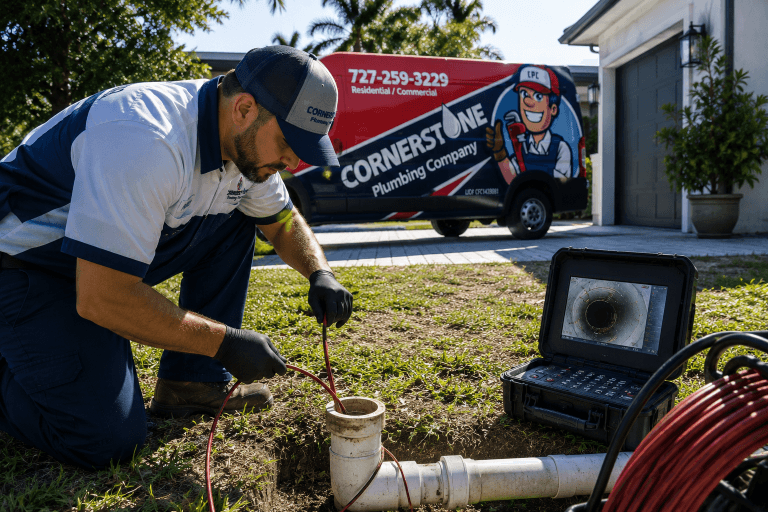
Video Camera Sewer Inspections
Modern camera inspection technology provides restaurant owners with valuable information about the condition of underground drain lines without unnecessary excavation. Video inspections can identify:
- Grease buildup
- Pipe deterioration
- Cracks
- Root intrusion
- Misaligned drain lines
- Developing blockages
Instead of relying on guesswork, restaurant owners receive clear visual confirmation of their plumbing system’s condition, allowing maintenance decisions to be based on actual findings.
When Should You Call a Commercial Kitchen Plumber?
While every restaurant experiences occasional plumbing issues, certain warning signs should never be ignored. Scheduling an inspection early often prevents more expensive repairs later.
Consider contacting a commercial plumber if you notice:
- Floor drains backing up repeatedly
- Grease trap odors
- Slow-draining sinks
- Water leaks around kitchen equipment
- Reduced water pressure
- Overflowing grease interceptors
- Frequent plumbing repairs
- Unexpected increases in water usage
- Standing water around food preparation areas
Addressing these issues early helps restaurants reduce downtime, protect expensive equipment, and maintain safe working conditions.
Why Restaurants Throughout St. Petersburg Choose Cornerstone Plumbing Company
Restaurants depend on reliable plumbing every day to support food preparation, sanitation, employee safety, and customer satisfaction. When plumbing problems occur, business owners need more than a quick repair. They need experienced professionals who understand the unique demands of commercial kitchen environments.
Since 2006, Cornerstone Plumbing Company has proudly served restaurants, cafés, hotels, healthcare facilities, schools, apartment communities, and commercial properties throughout St. Petersburg, Pinellas Park, Clearwater, Largo, Seminole, Gulfport, Treasure Island, St. Pete Beach, and surrounding Pinellas County communities.
Our commercial plumbing services include:
- Commercial kitchen plumbing repairs
- Commercial drain cleaning
- Hydro jetting
- Grease interceptor troubleshooting
- Leak detection
- Commercial water heater services
- Backflow prevention testing
- Emergency commercial plumbing
- Preventative plumbing maintenance
Every project begins with a thorough inspection, honest recommendations, and practical solutions designed to improve long-term plumbing reliability rather than simply temporary repairs.
We understand that restaurant owners need dependable response times, clear communication, and experienced commercial plumbers who appreciate how valuable every hour of business operation truly is.
Keep Your Commercial Kitchen Operating at Its Best
Commercial plumbing problems rarely happen at convenient times. A blocked floor drain, grease interceptor failure, or leaking plumbing fixture can quickly interrupt kitchen operations and affect both employees and customers.
Investing in routine maintenance and addressing small plumbing concerns early helps restaurants reduce emergency repairs, protect valuable equipment, and maintain efficient day-to-day operations.
Need Commercial Kitchen Plumbing Repair in St. Petersburg?
Whether you’re dealing with recurring drain backups, grease trap issues, preventative maintenance, hydro jetting, or emergency commercial plumbing repairs, Cornerstone Plumbing Company is ready to help restaurants throughout St. Petersburg and the surrounding Tampa Bay area.
Schedule your commercial plumbing inspection today or contact Cornerstone Plumbing Company to discuss your restaurant’s plumbing needs with our experienced commercial plumbing team.
Frequently Asked Questions