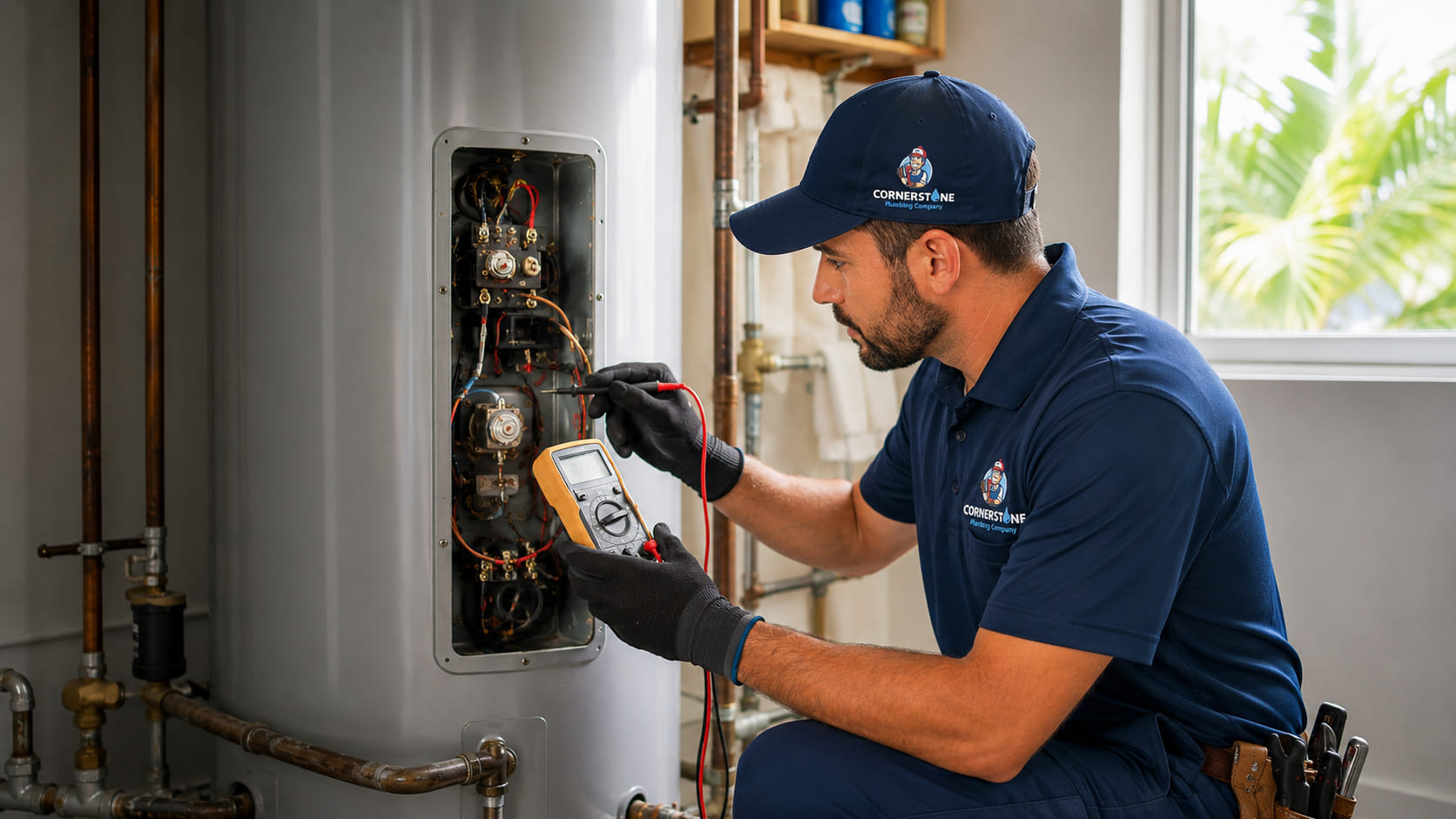
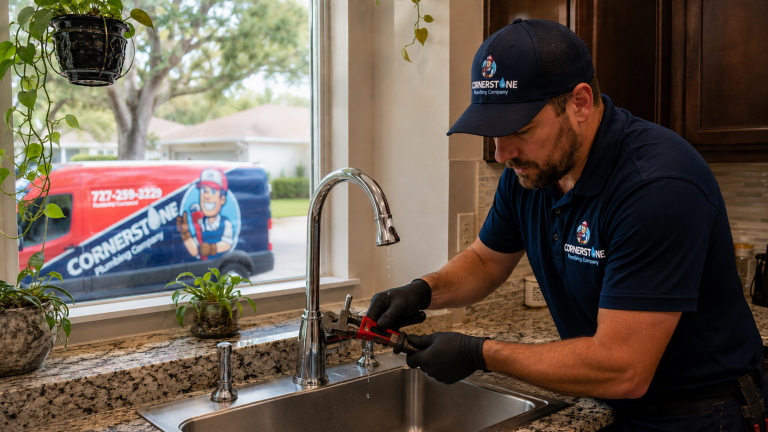
There are few household problems more frustrating than stepping into the shower expecting hot water and being greeted with a blast of cold water instead. For many homeowners throughout Tampa Bay, St. Petersburg, Clearwater, and Pinellas Park, the problem is not always a failed water heater. In many cases, a faulty heating element is the real culprit.
If you are researching the cost to replace a water heater element in Tampa, you are likely trying to determine whether a repair is worth the investment or if it makes more sense to replace the entire water heater. Understanding the difference can save you money and help you avoid unnecessary repairs. Electric water heaters rely on heating elements to warm the water inside the tank. When one of those elements fails, your hot water supply can quickly become inconsistent or disappear altogether. Fortunately, many element failures can be repaired without replacing the entire system.
This guide explains how water heater elements work, common signs of failure, factors that affect repair costs, and when replacement may be the smarter long term solution for your home.
Key Takeaways
- Heating element failure is one of the most common causes of no hot water in electric water heaters.
- Tampa Bay’s hard water conditions can accelerate sediment buildup and shorten element lifespan.
- Professional diagnosis helps identify whether the issue is the element, thermostat, wiring, or another component.
- Water heater element replacement is often more affordable than full water heater replacement.
- Older systems with multiple problems may benefit more from replacement than repair.
- Regular maintenance can improve efficiency and extend equipment life.
- Professional repairs help ensure safe operation and reliable performance.
Understanding How Water Heater Elements Work
Most residential electric water heaters contain two heating elements. The upper element heats water near the top of the tank while the lower element handles much of the ongoing heating process as hot water is used throughout the day. When both elements are functioning properly, the system delivers a steady supply of hot water for showers, laundry, dishwashing, and everyday household use.
When one element fails, performance begins to decline. Some homeowners notice that their hot water runs out much faster than normal. Others experience lukewarm water or inconsistent temperatures throughout the day. In some situations, a failed upper element can result in no hot water at all.
Before assuming that the entire water heater needs replacement, it is important to determine whether the issue is limited to a single heating element.
If your water heater is struggling to keep up with demand or producing inconsistent temperatures, a professional Water Heater Repair inspection can help identify the exact cause before more extensive repairs become necessary.
Why Water Heater Elements Fail in Tampa
One of the biggest factors affecting water heater performance throughout Tampa Bay is hard water. Hard water contains naturally occurring minerals such as calcium and magnesium. Over time, these minerals settle inside the tank and create sediment buildup around the heating elements.
As sediment accumulates, the heating element must work harder to transfer heat into the surrounding water. This additional strain can reduce efficiency, increase energy usage, and eventually cause the element to fail.
Common signs of sediment buildup include:
- Reduced hot water availability
- Longer recovery times
- Increased utility bills
- Popping or rumbling sounds from the tank
- Fluctuating water temperatures
According to the U.S. Department of Energy, sediment accumulation is one of the leading causes of reduced water heater efficiency and shortened equipment lifespan.
The Impact of Hard Water on Water Heaters
Hard water affects more than just heating elements. Mineral buildup can impact:
- Thermostats
- Drain valves
- Anode rods
- Internal tank surfaces
- Water flow efficiency
As sediment accumulates around the heating element, it creates a barrier that makes it more difficult for heat to transfer into the water. This causes the element to remain active longer, increasing wear and reducing efficiency.
Many homeowners first notice the problem when their water heater begins making popping or crackling sounds. These noises are often caused by trapped water beneath sediment deposits turning into steam.
Homeowners dealing with recurring water heater issues often benefit from a professional inspection to determine whether the problem is limited to the heating element or indicates a larger system concern.
Signs Your Water Heater Element Needs Replacement
Heating element failure can produce several warning signs.
No Hot Water
One of the most obvious indicators is a complete loss of hot water. When the upper element fails, many electric water heaters struggle to initiate the heating cycle properly.
Water Starts Hot Then Turns Cold
A failed lower element often causes water to start hot and then quickly become cold as the available heated water is depleted.
Strange Noises
Popping, crackling, and rumbling sounds frequently indicate sediment buildup around the element.
Rising Utility Bills
A failing element often works harder and longer to heat the same amount of water, resulting in higher electricity usage.
Inconsistent Water Temperature
Fluctuating temperatures may indicate problems with the heating element, thermostat, or electrical system.
If your water heater is producing lukewarm water, making unusual noises, or struggling to keep up with your household’s hot water demands, a professional inspection can help determine whether a simple repair or a full replacement is the smarter long term investment.
Common Water Heater Problems That Mimic Element Failure
Many homeowners assume the heating element is always responsible when hot water problems occur. However, several issues can create similar symptoms:
- Faulty thermostats
- Tripped breakers
- Electrical wiring problems
- High limit switch failures
- Sediment buildup
- Aging water heaters nearing the end of their lifespan
This is one reason professional diagnosis is so important. Replacing a heating element will not solve the problem if another component is actually responsible.
Homeowners experiencing inconsistent hot water often benefit from a professional diagnosis before replacing parts. Identifying the root cause can prevent unnecessary repairs and help extend the life of the system.
What Does It Cost to Replace a Water Heater Element in Tampa?
The answer depends on several factors. Water heater element replacement costs can vary based on:
- Type of water heater
- Number of failed elements
- Accessibility of the unit
- Extent of sediment buildup
- Electrical testing requirements
- Additional repairs discovered during inspection
In many cases, replacing a failed heating element is significantly less expensive than replacing the entire water heater. However, every situation is different.
Professional service typically includes:
- Diagnostic testing
- Electrical safety inspections
- Tank draining
- Sediment removal
- Heating element replacement
- System testing
- Performance verification
The goal is not simply to replace the failed component but to ensure the entire system operates safely and efficiently after repairs are completed.
While every repair is different, water heater element replacement is typically far less expensive than replacing the entire water heater. The final cost depends on the condition of the system, accessibility, the number of elements being replaced, and whether additional repairs are discovered during the inspection process.
Why Professional Diagnosis Matters
Many homeowners attempt to solve water heater issues by replacing parts without proper testing. Unfortunately, symptoms associated with element failure can also result from:
- Faulty thermostats
- Electrical problems
- Internal tank issues
- Safety control failures
Replacing the wrong component wastes both time and money.
If you are experiencing no hot water, inconsistent temperatures, or rising utility bills, scheduling a professional Water Heater Repair evaluation can help determine the most cost effective solution.
Repair or Replace: Which Option Makes More Sense?
Not every water heater problem requires complete replacement. In many situations, replacing a failed heating element can restore reliable performance and extend the life of the system. However, replacement sometimes becomes the better long term investment.
When Repair Is Usually the Better Option
Repair often makes sense when:
- The water heater is less than 8 years old.
- The tank shows no signs of corrosion.
- Only one heating element has failed.
- The thermostat and electrical system are functioning properly.
- Overall performance has been reliable.
When Replacement May Be the Smarter Investment
Replacement may be worth considering if:
- The tank is leaking.
- Rusty water is present.
- Multiple components are failing.
- The system is more than 10 years old.
- Repairs are becoming increasingly frequent.
In these situations, investing in a new Water Heater Installation may provide greater efficiency, reliability, and long term value.
Homeowners experiencing repeated water heater repairs may benefit from comparing repair costs against the long term value of a new water heater installation.
The Professional Water Heater Element Replacement Process
Replacing a heating element involves more than swapping out a part.
Comprehensive System Diagnosis
Technicians begin by verifying the source of the problem through electrical testing and component inspections.
Tank Draining and Sediment Removal
The tank must be drained before element replacement can occur. During this process, sediment buildup is often identified and removed to improve performance.
Element Installation
The new element is installed according to manufacturer specifications.
System Testing
After installation, technicians verify proper operation through temperature testing, electrical inspections, and performance checks. Only after all testing is complete is the repair considered finished.
How to Extend the Life of Your Water Heater
Preventive maintenance can significantly improve water heater performance and longevity. Simple steps include:
- Scheduling periodic inspections
- Flushing sediment from the tank
- Addressing minor repairs early
- Monitoring water temperature changes
- Replacing aging components before failure
For Tampa Bay homeowners, routine maintenance is especially important because hard water conditions place additional strain on water heater systems.
If sediment buildup has reduced your water heater’s efficiency, professional maintenance may help improve performance before a complete replacement becomes necessary.
How Long Do Water Heater Elements Last in Florida?
The lifespan of a heating element depends on several factors. These include:
- Water quality
- Maintenance history
- Usage patterns
- Sediment accumulation
- Equipment quality
In Florida, heating elements commonly last between 5 and 10 years. Regular maintenance can help maximize lifespan and improve efficiency.
If your water heater is more than 10 years old and experiencing repeated issues, now may be the ideal time to compare repair costs against the benefits of a modern replacement system.
Why Tampa Bay Homeowners Choose Cornerstone Plumbing Company
At Cornerstone Plumbing Company, we understand how disruptive water heater problems can be. Our team proudly serves homeowners throughout Tampa, St. Petersburg, Clearwater, Pinellas Park, and surrounding communities. We focus on:
- Accurate diagnostics
- Transparent communication
- Quality workmanship
- Long term solutions
- Respect for your home
Whether you need a simple heating element replacement, complete Water Heater Installation, or emergency plumbing assistance, our goal is to provide dependable solutions tailored to your home’s needs.
Schedule Your Water Heater Inspection Today
A failed heating element does not always mean you need a new water heater. In many cases, professional repairs can restore reliable hot water and extend the life of your system for years. Whether you need help diagnosing a problem, comparing repair versus replacement options, or planning a new water heater installation, Cornerstone Plumbing Company is here to help. Our experienced plumbers proudly serve homeowners throughout Tampa Bay, St. Petersburg, Clearwater, Pinellas Park, and surrounding communities.
Contact Cornerstone Plumbing Company today to schedule your water heater inspection and get your hot water back quickly and safely.
Frequently Asked Questions